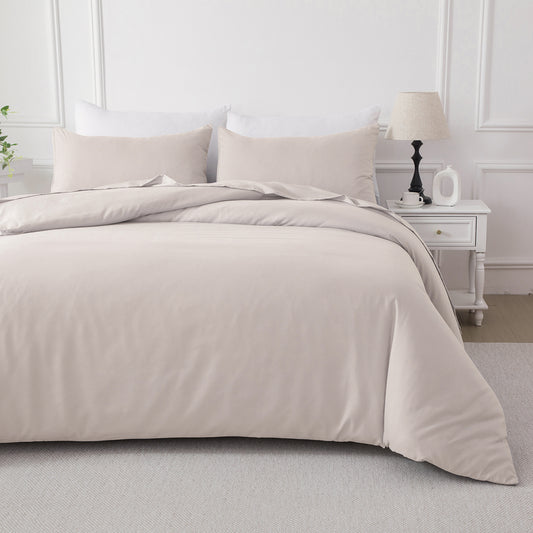
Refresh your bedding for warmer weather by reviewing fabric, quilt weight, adjustable layers, colour and care—without assuming one material suits every sleeper.
As the weather becomes warmer, changing a few bedding layers can make the bedroom feel lighter and easier to manage. A summer refresh does not require replacing everything; it is usually about reviewing fabric, quilt weight, layering and colour.
Comfort is personal, and no single material guarantees a cooler night. Room temperature, ventilation, the quilt itself and individual preferences all matter. The following ideas can help you create a more flexible bed for warmer weather.
1. Review the bedding material
Fabric affects breathability, texture, washing and drying. Cotton is generally chosen for its natural fibres and breathable feel, while microfibre is often valued for its smooth texture and quick drying.
Neither is automatically right for every summer bedroom. Consider:
- How warm the room becomes overnight
- Your preferred surface texture
- How often the bedding is washed
- Available drying space and time
- The fabric weight and weave of the individual product
Our cotton vs microfibre bedding guide compares both materials across breathability, drying, texture and care.

2. Check the quilt and overall fabric weight
The quilt inside the cover contributes much of the bed’s warmth. If the current setup feels too heavy in summer, check the quilt’s filling, weight and manufacturer guidance before assuming the cover is the problem.
The cover also matters. Two products made from the same fibre can feel different because of their weave and weight, so read the individual product details rather than relying only on the word “cotton” or “microfibre”.
For a broader seasonal approach, read How to Choose Bedding That’s Comfortable Year-Round.
3. Use adjustable layers
Several lighter layers can be easier to adjust than one heavy combination. Depending on your preferences, the bed might include:
- A fitted sheet
- An optional top sheet
- A suitable quilt and quilt cover
- A lightweight blanket or throw kept nearby for cooler nights
Only include layers you actually use. Too many decorative textiles can make the bed harder to manage and may add unnecessary weight.
4. Create a lighter visual palette
Colour does not change the physical warmth of indoor bedding in a simple or predictable way, but it can change how light or heavy the room appears.
For a fresh summer look, you might consider:
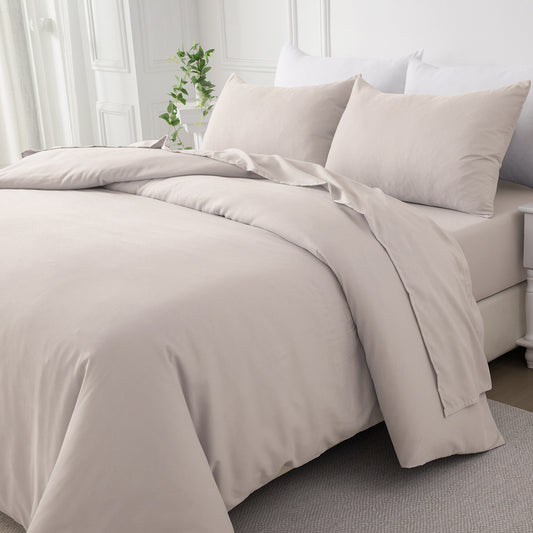
- White, cream or pale neutral bedding
- Muted blues, greens or soft earthy shades
- A subtle print used as the main feature
- One stronger accent colour through pillowcases or a throw
You do not need every item to match. Repeating one or two colours across the bed can create a coordinated result without purchasing an identical set of accessories.

5. Add interest through texture
If you reduce the number of layers, texture can stop the bed from looking flat. A gently textured quilt cover, contrasting pillowcase or lightweight woven throw may be enough.
Keep the strongest texture or pattern as the feature and let the surrounding pieces remain simpler. This makes the arrangement easier to coordinate and prevents the bed from feeling visually crowded.
For guidance on balancing colour, pattern and texture, see Designing a Bedroom That Feels Like You.

6. Make small seasonal changes first
Before buying a complete new set, identify what is making the current bed unsuitable. A different quilt cover, fitted sheet or pair of pillowcases may provide the visual or practical change you want.
If you are choosing a new quilt cover, confirm the quilt dimensions, set inclusions, material and care requirements. Our quilt cover buying guide provides a complete checklist.
7. Keep the summer care routine practical
Warmer weather may change how frequently the bedding needs attention, but there is no universal washing schedule. Follow the product care label and consider how the bed is used.
Make sure every item is completely dry before returning it to the bed or storing it. For fabric-appropriate washing, drying and stain advice, use our bedding care guide.
Frequently asked questions
What bedding material is best for summer?
There is no single best material for everyone. Cotton is generally more breathable, while microfibre is often smooth and quick drying. Fabric weight, weave, room conditions and personal preferences also matter.
Will light-coloured bedding keep me cooler?
Light colours can make the bedroom look fresher, but indoor comfort depends more directly on factors such as ventilation, room temperature, the quilt and the fabric construction.
Should I remove the quilt in summer?
That depends on the room, climate and your preferences. Some people use a lighter quilt or adjustable layers. Follow the quilt manufacturer’s guidance and choose a setup that remains comfortable for you.
Can microfibre bedding be used in summer?
Yes. Microfibre may suit people who prioritise a smooth feel and quick drying. Check the fabric weight and product details, as microfibre bedding is not identical across every product.
How can I refresh the bed without replacing everything?
Change one visible or practical element first, such as the quilt cover, sheets or pillowcases. Coordinate the new piece with colours and textures you already own.
Further reading
- How Bedding Material Affects Sleep Quality and Comfort – understand how breathability, texture and weight influence comfort.
- Creating a Calm Bedroom Retreat – coordinate colours, textures and lighting throughout the room.
- Why Easy-Care Materials Matter in Busy Households – compare washing, drying and long-term maintenance before buying.
Final thoughts
A summer bedding refresh should make the bed easier to adjust and maintain. Begin with the room conditions and quilt weight, then review the cover material, layers and colours.
Small changes are often enough. Choose products according to their measurements, fabric details and care instructions rather than relying on seasonal labels alone.
Explore Ezymall’s bedding collection to compare quilt covers, sheets and pillowcases across different materials, colours and sizes.