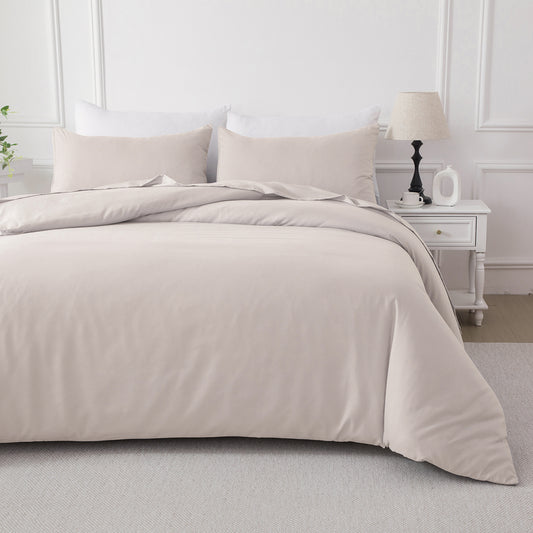
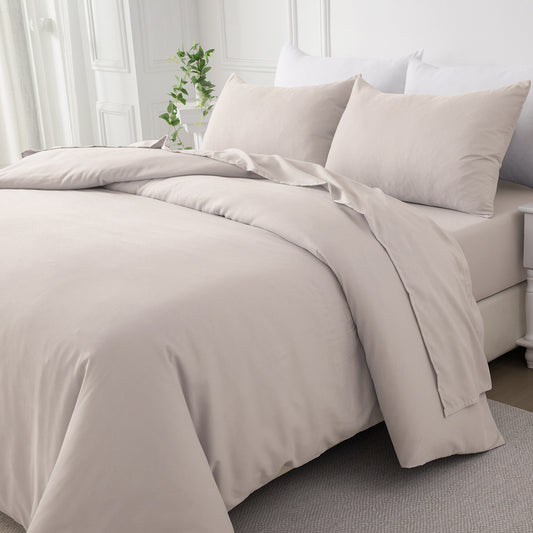
Choose a quilt cover set that suits how you sleep, wash and style your bedroom. Compare fabrics, colours, sizing, seasonal comfort and everyday care before deciding.
Your bedroom should be more than simply a place to sleep. It should feel comfortable, restful and personal to you. Because the quilt cover is one of the most noticeable features in the room, it influences both how the bed feels and how the whole space looks.
This guide explains what to consider when choosing a quilt cover set, from fabric and colour to sizing, seasonal comfort and everyday care.
1. Start with the fabric
The fabric affects how your quilt cover feels against the skin, how it handles regular washing and how well it suits your sleeping preferences.
- Microfibre: Smooth, lightweight and generally quick to dry. It can be a practical choice for busy households, children’s rooms and guest bedrooms.
- Cotton twill: Made from natural cotton fibres with a subtle diagonal weave. It offers a breathable feel, gentle texture and added structure.
Neither material is automatically right for everyone. Your preferred texture, washing routine and sleeping temperature all matter. Our cotton vs microfibre bedding guide provides a practical side-by-side comparison. You can also learn more about the weave and feel of cotton twill in our guide to cotton and cotton twill bedding.
2. Choose colours that support the mood
Your quilt cover sets the visual tone for the bedroom, so start by thinking about how you want the space to feel.
- Soft neutrals, such as beige, ivory and grey, can create a calm and balanced foundation.
- Earthy tones can introduce warmth and a natural feeling.
- Whites and blues often create a fresh, timeless look.
- Patterns can add personality, especially when the surrounding sheets, cushions and décor are kept relatively simple.
You do not need every piece to match exactly. Coordinating colours and textures often feels more relaxed and personal than using one identical design throughout the room.

3. Think about year-round comfort
Your quilt provides most of the warmth, but the quilt cover still contributes to the overall feel of the bed. Breathable fabrics and lighter colours can feel more inviting in warmer weather, while deeper tones and layered textures can make the bedroom feel cosier in winter.
Instead of replacing everything each season, keep the main bedding versatile and adjust the layers around it. A lightweight blanket, throw or additional sheet can make the bed easier to adapt as temperatures change.
For more help balancing fabric, weight and layering, read our guide to choosing comfortable bedding year-round.

4. Check the size and fit
Before buying, confirm both your mattress size and the size of the quilt you plan to cover. A Queen mattress does not always mean the household is using a Queen quilt; some people deliberately choose a larger quilt for extra drape and coverage.
Check the measurements shown on the individual product page rather than relying only on the size name. Also confirm what is included in the set, such as the number and size of matching pillowcases.
5. Consider everyday care
A quilt cover should fit comfortably into your normal laundry routine. Read the care label before washing, use an appropriate detergent and avoid excessive heat unless the product instructions allow it.
Turning the cover inside out before washing can help protect its colour and surface. Treat stains promptly and make sure the cover is fully dry before storing it. Our quilt cover care guide explains the process in more detail.

6. Complete the bed without over-styling it
Start with comfortable sheets, add the quilt cover, then introduce only the layers that serve a purpose. Coordinating pillowcases, a folded throw or one feature cushion may be enough to make the bed feel finished.
Mixing textures can create depth, but leave some visual breathing room. A bed should still be easy to use and maintain every day.

Frequently asked questions
Should a quilt cover be the same size as the quilt?
Yes. Match the quilt cover to the quilt dimensions for an even fit. Check the measurements on both items because sizing can vary between products.
Is cotton or microfibre better for a quilt cover?
It depends on your priorities. Cotton may suit people who prefer natural fibres and breathability, while microfibre may suit households wanting a smooth, lightweight and easy-care option.
Can I use a larger quilt on my bed?
Yes. Some people size up for additional drape or coverage, but the quilt cover should still match the larger quilt rather than the mattress.
How often should I wash a quilt cover?
There is no single schedule for every household. Consider how the bed is used, whether you use a top sheet, the season and the product’s care instructions.
How can I refresh my bedroom without replacing everything?
Changing the quilt cover or pillowcases can introduce a new colour or pattern while allowing you to keep the same furniture, sheets and decorative pieces.
Further reading
- How Bedding Material Affects Sleep Quality and Comfort – understand how breathability, texture and fabric weight influence comfort.
- Designing a Bedroom That Feels Like You – build a more personal room through colour, pattern and thoughtful layering.
- Bedroom Styling Tips for a More Relaxed Space – create a calmer look without adding unnecessary clutter.
Final thoughts
The right quilt cover set should suit the way you sleep, wash and style your bedroom. Begin with the fabric and fit, then choose a colour or pattern that feels comfortable in your space.
Explore Ezymall’s bedding collection to compare quilt cover sets, sheets and pillowcases across different materials, colours and sizes.