The best sink for a small kitchen is not necessarily the smallest. Learn how to balance bowl capacity, cabinet fit, drainer space and remaining benchtop area.
Quick answer: A practical single bowl is a strong starting point for many small Australian kitchens, but there is no universal best size. Choose a sink that fits the cabinet below, leaves useful preparation space and can handle your largest regularly used cookware. Before ordering, check the sink’s overall dimensions, bowl dimensions, minimum cabinet width, benchtop cut-out and installation requirements.

Why sink choice matters more in a small kitchen
In a compact kitchen, the sink competes with food-preparation space, appliances, storage and the dishwasher for a limited amount of room. A sink that is too large can consume valuable benchtop area, while one that is too small may make washing pans, trays and chopping boards unnecessarily difficult.
The goal is therefore not to find the smallest kitchen sink available. It is to find the most useful sink your cabinet and benchtop can comfortably support.
This is particularly relevant in apartments, townhouses, secondary dwellings and homes designed for downsized living. A compact kitchen still needs to function as a complete kitchen, so every component needs to earn the space it occupies.
Start with how you use the kitchen
Two kitchens with the same dimensions can require very different sinks. Before comparing products, consider the tasks the sink needs to handle.
| Your household | What to prioritise | Possible starting point |
|---|---|---|
| Regularly uses a dishwasher | One useful bowl for rinsing and washing cookware that cannot go in the dishwasher | Well-sized single bowl |
| Hand-washes most dishes | Washing capacity and somewhere for wet dishes to drain | Single bowl with drainer, or a bowl with a removable drying rack |
| Frequently washes baking trays and large pans | An uninterrupted bowl without a central divider | Single bowl sized around the largest regularly used item |
| Needs two tasks separated | Enough usable space in both bowls | Carefully measured compact double or 1.5-bowl sink |
| Has very limited preparation space | Accessories that create temporary working space over the bowl | Compatible chopping board, colander or workstation-style accessory |
What size sink works in a small kitchen?
There is no single standard size that works in every small kitchen. The correct size depends on the cabinet, benchtop, installation method and household.
Begin with these five measurements:
- Base-cabinet width: Measure the cabinet that will contain the bowl and plumbing. Use the sink manufacturer’s specified minimum cabinet width rather than estimating from the external sink size.
- Available benchtop length: Measure the complete area that can be allocated to the sink while preserving useful preparation and landing space.
- Benchtop depth: Check that the sink fits from front to back while leaving sufficient material around the cut-out for the selected installation.
- Bowl dimensions: Compare the internal width, length and depth with your largest pan, tray or chopping board.
- Cut-out dimensions: The benchtop opening is not normally the same size as the sink’s overall dimensions. Follow the technical drawing supplied with the individual product.
If you are still working out the available footprint, Ezymall’s Kitchen Sink Sizes Australia guide explains cabinet requirements, bowl depth and the measurements to check before ordering.
Is a single bowl best for a small kitchen?
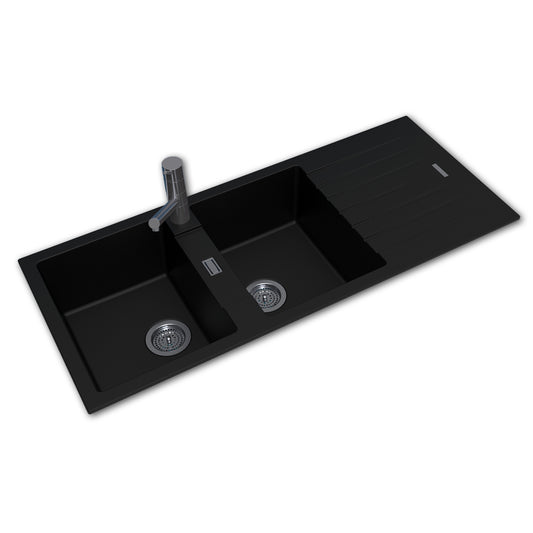
For many compact kitchens, a single bowl provides a useful balance between capacity and footprint. Removing the divider found in a double sink creates one uninterrupted washing area, which can make it easier to accommodate larger cookware.
A single bowl is particularly worth considering when:
- You use a dishwasher for most plates and cutlery
- You regularly wash roasting trays, frying pans or stockpots
- You want to preserve as much benchtop space as possible
- You are comfortable using a removable tub or bowl when tasks need to be separated

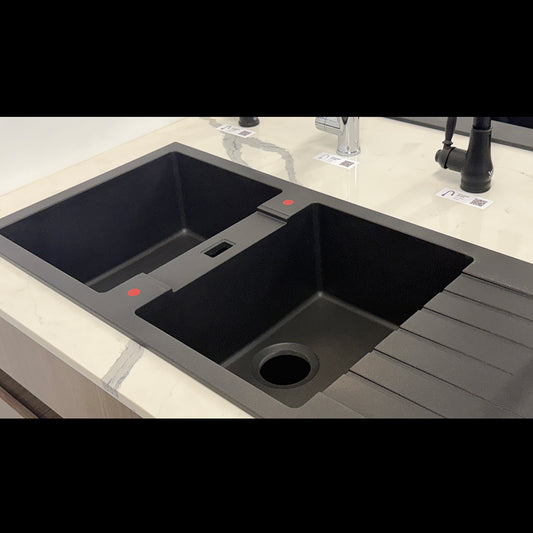
A double bowl can still be appropriate if you genuinely use both bowls. For example, washing in one while rinsing or preparing food in the other. The important question is whether both bowls will remain large enough to be useful after fitting them into the available cabinet.
For a more detailed comparison, see Single Bowl, Double Bowl or Drainer Sink?

Do you need a drainer in a compact kitchen?
A fixed drainer uses additional benchtop length, but that does not automatically make it wasteful. For households that regularly hand-wash dishes, an integrated drainer creates a dedicated wet zone and helps keep water away from the surrounding preparation surface.
A sink with a drainer may suit you if:
- You do not have a dishwasher
- You hand-wash delicate glassware, cookware or knives
- You want wet dishes to drain back towards the bowl
- You prefer a permanent drying area rather than storing a removable rack
A sink without a fixed drainer may preserve more uninterrupted bench space. A removable drying rack, roll-up mat or compatible over-sink accessory can then be brought out only when needed.
Think about where wet dishes will actually go. Removing the drainer does not save usable space if a large freestanding dish rack permanently occupies the bench beside the sink.
Can workstation accessories help?
Accessories can make the area above the bowl perform more than one task. A compatible chopping board, colander, tray or drying rack may temporarily convert part of the sink into preparation or draining space.
This can be useful when the kitchen has limited uninterrupted benchtop area, but compatibility must be checked carefully. Accessories need to match the sink’s ledges and dimensions; a board or tray described for one model should not be assumed to fit another.
Also consider storage. A collection of accessories only saves space if it has somewhere practical to go when it is not being used.
How deep should a small kitchen sink be?
Bowl depth affects capacity, splashing and comfort. A deeper bowl can contain larger cookware and help conceal unwashed dishes, but it also reaches further into the cabinet and requires the user to reach further down.
Before selecting a deep sink, check:
- Available space around the waste and plumbing
- Whether bins, drawers or storage systems will sit beneath it
- The height of the benchtop and comfort of the regular users
- Whether the mixer provides suitable clearance above the bowl
Do not choose depth in isolation. A slightly smaller but well-proportioned bowl may be more comfortable and useful than the deepest model available.
Inset or undermount: which is better?
Inset or topmount sink
An inset sink rests on the benchtop with a visible rim. It can be a practical renovation option and may suit a wider range of benchtop materials. The rim and seal require routine cleaning, and the exact cut-out must still follow the manufacturer’s template.
Undermount sink
An undermount sink is fixed beneath the benchtop, creating a streamlined edge that allows crumbs and water to be wiped directly into the bowl. It is generally used with suitable solid, water-resistant benchtop materials and requires accurate fabrication and installation.
Neither installation method automatically creates more functional space. Choose according to the benchtop material, budget, cleaning preference and product instructions, and confirm the installation with the benchtop fabricator and plumber.
Which sink material suits a small kitchen?
Stainless steel
Stainless steel has a visually light appearance and is available in many compact configurations. Compare steel grade, thickness, sound-reducing treatment, finish and product warranty rather than judging by appearance alone.
Granite composite
Granite composite provides a more solid, design-led appearance and is available in neutral and darker colours. Check the individual product’s composition, care requirements and manufacturer-supported performance claims. A lighter neutral finish can coordinate gently with pale benchtops and timber cabinetry, while a darker sink creates stronger contrast.
Fireclay or ceramic
Fireclay and ceramic sinks can create a strong farmhouse or traditional focal point. Their weight, cabinet support and installation requirements need to be considered early, especially in a compact renovation.
If material is still undecided, compare the practical differences in Granite Sink vs Stainless Steel Sink.
A compact-kitchen example: the Laveo Dafne
The Laveo Dafne Beige Granite Composite Single Bowl Sink with Drainer measures 780 × 470mm overall and is specified for a minimum 500mm cabinet.
It is not the smallest sink by overall length because it includes a dedicated drainer. Its space-conscious feature is the combination of a round single bowl and draining area while the bowl fits a 500mm base cabinet. The reversible design also allows the drainer to be positioned on either side to suit the kitchen layout.
This makes it worth considering for a smaller kitchen where the household wants a permanent drainer and can allocate 780mm of benchtop length. A kitchen with extremely limited bench space may be better served by a compact bowl without an integrated drainer.

Small-kitchen sink checklist
- Measure the cabinet’s usable internal space
- Check the manufacturer’s minimum cabinet width
- Measure the available benchtop length and depth
- Compare overall, bowl and cut-out dimensions separately
- Test the bowl against your largest regularly used cookware
- Decide whether you need one bowl, two bowls or task separation
- Choose between a fixed drainer and removable drying solution
- Check the sink and accessories are genuinely compatible
- Confirm tap position, waste location and dishwasher connection
- Check the installation method against the benchtop material
- Have the technical drawing reviewed before the benchtop is cut
Frequently asked questions
What is the best sink for a small kitchen?
For many small kitchens, a well-sized single bowl is a practical starting point because it provides uninterrupted washing space without the footprint of two bowls. The best choice still depends on cabinet size, available bench space, cookware and whether dishes are mainly hand-washed or placed in a dishwasher.
Does a small kitchen need a small sink?
Not necessarily. An undersized sink can be frustrating if it cannot accommodate regularly used pans or trays. The better objective is to choose the largest useful bowl that fits the cabinet and leaves enough functional preparation space.
Is a single or double bowl better for a small kitchen?
A single bowl usually provides more uninterrupted capacity within a compact footprint. A double bowl is useful when tasks need to remain separate, but both bowls must be large enough for the household’s actual needs.
Should a small kitchen sink have a drainer?
A fixed drainer is helpful for regular hand-washing and creates a controlled wet area. If bench space is more important, a removable rack or compatible over-sink drainer may provide greater flexibility.
Can a 780mm sink fit a 500mm cabinet?
Sometimes. A sink with a drainer can be wider overall than its required base cabinet because the bowl and plumbing occupy the cabinet while the drainer extends across the benchtop. Always use the individual manufacturer’s minimum-cabinet specification and technical drawing; do not assume every 780mm sink fits the same cabinet.
What should be measured before buying a kitchen sink?
Check the cabinet width, available benchtop length and depth, sink’s overall dimensions, internal bowl dimensions, bowl depth, cut-out size, tap position, plumbing space and installation type.
Choose the function before the finish
A well-chosen small-kitchen sink should preserve preparation space without making everyday washing difficult. Begin with the cabinet, benchtop and household routine. Once the required bowl capacity and configuration are clear, compare materials, colours and installation styles.
You can explore Ezymall’s kitchen sink collection or continue with our guide to choosing a sink for your kitchen layout.