Choosing the right kitchen sink starts with accurate measurements. Compare common Australian sink sizes, cabinet requirements, bowl depths and layouts before you buy.
Quick answer: There is no single standard kitchen sink size in Australia. Compact and standard single bowls commonly range from approximately 350–600 mm wide, larger single bowls from 600–750 mm, and double bowl sinks from 750–900 mm. Sinks with drainboards can extend from approximately 860–1200 mm.
The right size depends on your cabinet width, available benchtop space, preferred bowl layout and how you use your kitchen. Always confirm the individual sink’s overall dimensions, minimum cabinet requirement and cut-out template before ordering.
This guide compares common kitchen sink sizes in Australia, cabinet requirements, bowl depths and the key measurements to check before choosing your sink.
If you are considering an apron-front model, read our farmhouse sink cabinet requirements guide before ordering. It covers the apron opening, cabinet support, benchtop fabrication and plumbing clearances that standard size charts cannot confirm.
Common Kitchen Sink Sizes in Australia
The table below shows some of the most common kitchen sink sizes used in Australian homes. Use it as a general guide when comparing different sink configurations.
| Sink type | Typical width | Typical bowl depth | Often suitable for |
|---|---|---|---|
| Compact single bowl | 350–450 mm | 180–200 mm | Apartments and compact kitchens |
| Standard single bowl | 450–600 mm | 180–220 mm | Small to medium kitchens |
| Large single bowl | 600–750 mm | 200–250 mm | Family kitchens and large cookware |
| Double bowl sink | 750–900 mm | 180–220 mm | Busy kitchens and multitasking |
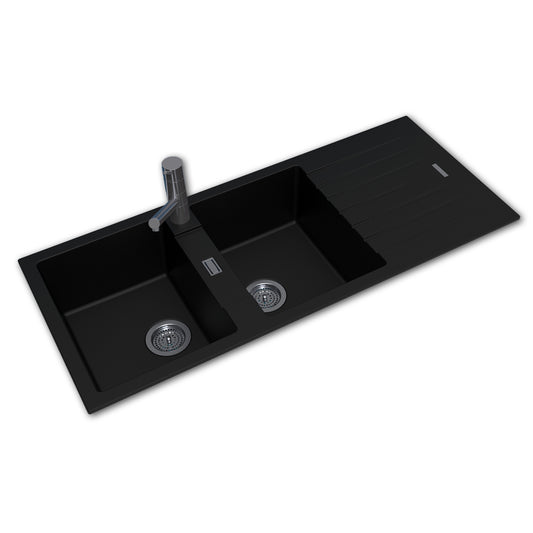
| Sink with drainboard | 860–1200 mm | 180–220 mm | Kitchens with sufficient benchtop and cabinet space |
These measurements are a general guide rather than a strict rule. The right sink size will depend on your cabinet width, benchtop space and installation method.
Tip: Always check the sink’s overall dimensions, minimum cabinet size and cut-out requirements before ordering.
1. Start With Your Kitchen Sink Cabinet Size
Before choosing a sink, measure the internal width of the base cabinet underneath your benchtop. This is often more important than the overall benchtop size because the sink bowl, mounting clips and plumbing must all fit comfortably inside the cabinet.
As a general guide:
- 450–600mm cabinet: compact or small single bowl sink
- 600–700mm cabinet: standard single bowl sink
- 700–800mm cabinet: large single bowl or compact double bowl sink
- 800–900mm cabinet: standard double bowl sink
- 900mm+ cabinet: large double bowl or sink with drainboard
The cabinet must normally be wider than the sink bowl to provide room for mounting hardware and installation. However, requirements vary between topmount, undermount and flush-mount sinks.
Important: Check the minimum cabinet size and cut-out template supplied with the individual sink before purchasing. If you are replacing an existing sink, measure both the cabinet and the current benchtop cut-out.
2. What Is a Standard Kitchen Sink Size in Australia?
There is no single standard kitchen sink size in Australia. However, many kitchen sinks measure approximately 450–900mm wide, depending on their bowl configuration and intended use.
Common sizes include:
- Compact and single bowl sinks: approximately 350–600mm wide
- Large single bowl sinks: approximately 600–750mm wide
- Double bowl sinks: approximately 750–900mm wide
- Sinks with drainboards: approximately 860–1200mm wide
These are general ranges rather than fixed standards. When selecting a sink, consider the available benchtop space, bowl capacity and how you use your kitchen. Always confirm the product’s overall dimensions, minimum cabinet size and required cut-out before ordering.
If you are replacing an existing sink, measure the current benchtop cut-out carefully. The new sink must either suit that opening or be large enough to accommodate an adjusted cut-out.
3. Single Bowl Kitchen Sink Sizes
Single bowl sinks are popular in Australian kitchens because they provide one uninterrupted washing area. They work particularly well for large pots, baking trays and other cookware that may not fit comfortably inside a divided sink.
Common single bowl sink widths include:
- 350–450mm: compact sinks for kitchenettes, apartments and small kitchens
- 450–600mm: standard sizes suitable for many everyday kitchens
- 600–750mm: large single bowls for families and frequent cooking
Typical bowl depths range from 180–220mm, although some larger models may be deeper. A deeper bowl provides more capacity and helps contain splashes, but it can be less comfortable for some users when installed in a standard-height benchtop.
Single bowl sinks are especially suitable for:
- Small to medium kitchens
- Homes that regularly use a dishwasher
- Washing large pots, pans and oven trays
- Homeowners who prefer a simple, spacious sink
Before ordering, check the sink’s overall dimensions, bowl dimensions and minimum cabinet size. A sink’s advertised width may include its rim or surrounding frame, not just the usable bowl.

4. Double Bowl Kitchen Sink Sizes
Double bowl kitchen sinks provide two separate washing areas, making it easier to wash, rinse, soak or prepare food at the same time. They are particularly practical for busy households and kitchens without a dishwasher.
Common double bowl sink widths include:
- 650–750mm: compact double bowls with smaller or unequal bowls
- 750–900mm: standard double bowl sinks for many family kitchens
- 900–1200mm: large double bowls or models with an integrated drainboard
Typical bowl depths range from approximately 180–220mm, although dimensions vary between models. Equal double bowls provide two similarly sized work areas, while offset designs combine one full-size bowl with a smaller secondary bowl.
Double bowl sinks are especially suitable for:
- Busy family kitchens
- Washing and rinsing at the same time
- Separating food preparation from washing
- Homes that do not regularly use a dishwasher
- People who prefer clearly divided work areas
Before purchasing, check the sink’s overall width, individual bowl dimensions and minimum cabinet requirement. Large double bowl sinks need sufficient cabinet and benchtop space, particularly when they include a drainboard.

5. Standard Kitchen Sink Depth
Kitchen sink depth affects capacity, splash control and everyday comfort. A deeper bowl can hold more dishes and accommodate larger cookware, but it may require you to bend further when washing.
Common kitchen sink bowl depths include:
- 160–180mm: shallower sinks suited to compact kitchens, kitchenettes or lighter use
- 180–200mm: a comfortable standard depth for many everyday kitchens
- 200–220mm: deeper bowls suited to families, frequent cooking and larger cookware
- 220mm+: extra-deep sinks offering greater capacity, where cabinet and plumbing space allow
For most households, a bowl depth of approximately 180–220mm provides a practical balance between capacity and comfort.
When choosing a sink depth, consider:
- The height of the benchtop
- The height and comfort of regular users
- Available plumbing and storage space below
- The size of pots, trays and dishes you regularly wash
- Whether the sink will be topmounted or undermounted
Remember that a product’s overall depth may refer to its front-to-back measurement, while bowl depth describes the vertical distance from the rim to the bottom of the bowl. Check the technical drawing carefully so these measurements are not confused.
6. Kitchen Sink Size vs Benchtop Space
Your kitchen sink should provide enough washing capacity without taking away too much valuable preparation space. A sink that is too large can crowd the benchtop, while one that is too small may not suit your household’s everyday needs.
Before choosing a sink, consider:
- Available benchtop width: Leave enough space for food preparation and frequently used appliances.
- Cabinet position: Check that the sink fits inside the base cabinet without interfering with cabinet walls, drawers or internal fittings.
- Sink configuration: Double bowls and sinks with drainboards generally require more width than single bowl models.
- Tap placement: Allow sufficient room behind or beside the sink for the mixer, tap holes and splashback clearance.
- Installation method: Topmount, undermount and flush-mount sinks have different edge and cut-out requirements.
- Accessories: Consider whether you want a drainer, chopping board, roll-up rack or other sink accessories.
For compact kitchens, a well-sized single bowl sink often provides the best balance between washing capacity and usable benchtop space. In larger kitchens, a double bowl or sink with a drainboard may offer greater flexibility without compromising the preparation area.
If you are replacing an existing sink, measure the current cut-out as well as the available benchtop. The replacement must suit the existing opening, or the benchtop must be suitable for safely enlarging it.

7. How to Measure for a Kitchen Sink Before You Buy
Understanding Kitchen Sink Dimensions and Measurements
When comparing kitchen sink sizes, you'll often see three measurements: width, front-to-back length, and bowl depth. Understanding these dimensions makes it much easier to choose a sink that fits both your cabinet and your everyday needs.
- Width – Kitchen sink width is the measurement from the left side of the sink to the right side. It affects how much bench space the sink occupies and the minimum cabinet size required for installation. While wider sinks provide more washing space, it's important to choose a size that suits both your cabinet and your kitchen layout.
- Length (Front to Back) – Measures the sink from the front edge to the back. Most kitchen sinks are around 440–500 mm front to back.
- Bowl Depth – Measures the depth of the bowl from the top rim to the bottom. Deeper bowls provide more space for washing large pots, trays and cutting boards.
It's also important to compare the overall sink dimension with the internal bowl dimensions. Two sinks can have the same external size but provide different usable bowl space depending on the bowl design and wall thickness.
Always check the overall dimensions, bowl dimensions and recommended cabinet size before purchasing to ensure the sink fits your kitchen.
Before ordering, measure and check:
- Internal cabinet width: Measure the usable space between the inside walls of the base cabinet, not its external width.
- Available benchtop space: Measure the total area available while allowing room for the tap, splashback and surrounding edges.
- Existing cut-out: When replacing a sink, measure the benchtop opening carefully and compare it with the new sink’s cut-out template.
- Overall sink size: Check the sink’s complete length and width, including its rim, flange or drainboard.
- Internal bowl dimensions: Confirm the usable width, length and vertical depth of each bowl.
- Minimum cabinet size: Use the manufacturer’s stated requirement rather than relying only on general size guides.
- Tap clearance: Make sure there is sufficient room for the mixer, tap hole and handle movement.
- Space underneath: Check the position of plumbing, waste connections, shelves, drawers and waste bins.
For undermount and flush-mount installations, precise cutting and correct support are essential. We recommend having the sink specifications and cut-out template checked by your cabinetmaker or installer before the benchtop is manufactured or altered.
Tip: Never use the overall sink dimensions as the cut-out dimensions. Follow the template supplied with the individual product.
8. Matching Kitchen Sink Size to Your Lifestyle
The best kitchen sink size depends not only on your available space, but also on how you cook, clean and use your kitchen each day.
Consider the following household needs:
- Apartments and compact kitchens: A compact single bowl sink can preserve valuable benchtop space while still providing enough capacity for everyday washing.
- Small households: A standard single bowl sink is often a practical, space-efficient choice.
- Families and frequent cooks: A large single bowl provides room for pots, pans and oven trays, while a double bowl allows washing, rinsing and food preparation to happen separately.
- Homes with a dishwasher: A spacious single bowl may be more useful than two smaller bowls, particularly for washing cookware that cannot go in the dishwasher.
- Homes without a dishwasher: A double bowl sink can make separate washing and rinsing easier.
- People who entertain regularly: A large single bowl, double bowl or sink with a drainboard can provide additional capacity during meal preparation and cleanup.
- Minimalist kitchens: A single bowl sink offers a clean appearance and maximises usable bowl space.
- Traditional or highly functional kitchens: A double bowl sink provides separate areas for different tasks.
Think about the items you wash most often, the number of people in your household and how much benchtop space you want to preserve. The right sink should fit the kitchen physically while also making everyday tasks easier.
Common Kitchen Sink Size Questions
What kitchen sink size is best for everyday use?
For most Australian households, a kitchen sink between 450 mm and 600 mm wide is suitable for everyday washing and food preparation. If you regularly wash large pots, baking trays or cook for a family, a large single bowl or double bowl sink between 600 mm and 900 mm may provide more practical working space. The best choice depends on your cabinet size, available benchtop space and how you use your kitchen every day.
What size sink fits a 600mm cabinet?
A compact or standard single bowl sink is often suitable for a 600mm cabinet. However, the sink’s overall width is not the only measurement to consider. The bowl, mounting clips and required installation clearance must all fit within the cabinet.
Always refer to the manufacturer's recommended minimum cabinet size, as installation requirements vary between sink models.
What size sink fits an 800mm cabinet?
An 800mm cabinet may accommodate a large single bowl sink or certain compact double bowl designs. The exact fit will depend on the sink dimensions, bowl configuration and whether it is installed as a topmount, undermount or flush-mount sink.
If you're considering an undermount or flush-mount sink, also confirm the benchtop cut-out dimensions with your installer before ordering.
How wide is a double kitchen sink?
Most double bowl kitchen sinks are between 750 mm and 900 mm wide, although larger models with integrated drainboards can exceed 1000 mm.
Also check the dimensions of each individual bowl. A wide sink does not necessarily provide two large, equal-sized bowls.
Is a deeper kitchen sink better?
Not necessarily. A deeper sink provides more capacity for dishes and cookware and may help reduce splashing. However, an excessively deep bowl may be less comfortable for some users.
For many households, a bowl depth of approximately 180–220 mm provides a practical balance between capacity, comfort and ease of use.
Can I install a larger sink than my cabinet size recommends?
Generally, no. The manufacturer's recommended minimum cabinet size is based on the sink's overall dimensions, mounting hardware and installation clearances. Installing a sink in a cabinet that is too small can make installation difficult and may interfere with plumbing or reduce cabinet strength. Always follow the manufacturer's installation requirements.
Final Thoughts
There is no single kitchen sink size that suits every Australian home. The right choice depends on your cabinet width, available benchtop space, preferred bowl configuration and how you use your kitchen each day.
Before ordering, check the sink’s overall dimensions, bowl depth, minimum cabinet requirement and cut-out template. Taking accurate measurements now can help prevent installation problems and ensure your new sink is practical, comfortable and properly proportioned for your kitchen.
Still Deciding Which Kitchen Sink Is Right for You?
Sink size is only one part of choosing the right kitchen sink. The bowl configuration, material and installation method can also affect how the sink looks, fits and performs in everyday use.
Explore these helpful guides:
- Single Bowl, Double Bowl or Drainer Sink? How to Choose the Best Layout
- Granite Sink vs Stainless Steel Sink: Which One Is Right for Your Kitchen?
- Undermount vs Top Mount Kitchen Sinks: Which Is Right for You?
- What Is a Granite Sink? Benefits, Care and Buying Tips
Or browse our kitchen sink collections: