The right combination of basin and tapware can transform your bathroom. Discover how to match colours and finishes to create a space that feels balanced, refined, and effortless.
A well-designed bathroom is not only about choosing attractive products. The basin, tapware, vanity, tiles and nearby fittings need to feel as though they belong in the same room.
Because the basin and mixer sit close together, differences in colour, undertone and surface finish are easy to notice. The combination does not need to match perfectly, but it should look intentional—and it still needs to work comfortably in everyday use.
Quick answer
Start by comparing the basin's colour undertone and its matte, gloss or textured surface. Chrome and brushed nickel can create a crisp or understated pairing with white and cool-grey basins. Brushed brass and copper introduce warmth beside cream, beige and warm stone-look finishes. Matte black creates stronger definition against either white or coloured basins. These are design starting points rather than fixed rules.
You do not need every metal finish to be identical. A bathroom often feels more connected when the main tapware finish is repeated in a few nearby details, such as the shower fittings, towel rail, cabinet handles or mirror frame.
Why does basin and tapware colour matching matter?
The vanity is a natural focal point, and the basin and tap are usually its most prominent functional elements. A close mismatch can appear accidental, while a deliberate contrast or coordinated tonal combination makes the selection feel considered.
There are three details to compare:
- Colour: white, black, grey, cream, stone-look or another basin colour.
- Undertone: whether the surrounding colour reads warmer, cooler or neutral under the room's lighting.
- Surface: polished, gloss, matte, brushed or textured.
Finish names are not universal colour standards. Two products described as gunmetal, brushed brass or matte black can differ in shade, sheen and texture, particularly when they come from different ranges.
Basin and tapware finish combinations at a glance
| Basin finish | Tapware starting points | Likely visual effect | Check before deciding |
|---|---|---|---|
| Gloss white | Chrome, brushed nickel, matte black, brushed brass or copper | From bright coordination to strong contrast | How reflections and nearby colours alter the pairing |
| Matte white | Matte black, brushed nickel, brushed brass or copper | Soft coordination or measured contrast | Whether a highly polished metal interrupts the intended muted palette |
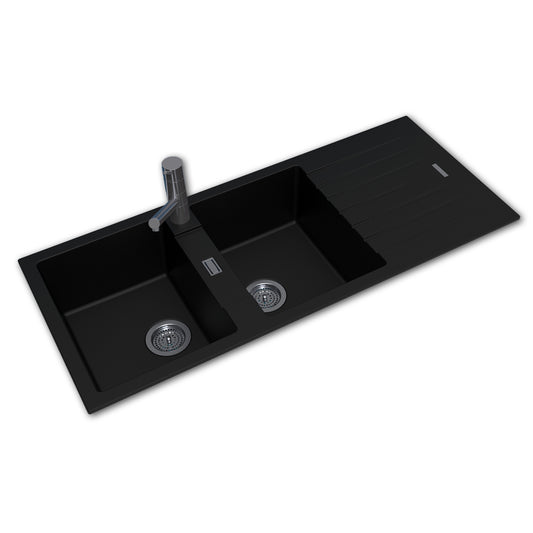
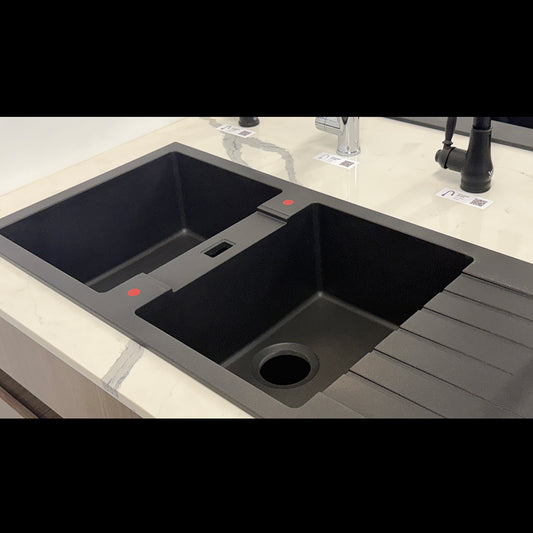
| Matte black | Matte black, brushed brass, copper, chrome or brushed nickel | Monochrome continuity or a contrasting metallic feature | The balance of dark elements across the vanity and room |
| Stone-look or textured | Brushed nickel, brushed brass, copper, gunmetal or matte black | Tonal layering or deliberate definition | The basin's actual veining, undertone and texture |
This table is a visual guide, not a compatibility chart. The mixer's height, reach and installation type must also suit the basin.
Which tapware works with a gloss white basin?
A gloss white basin has a reflective glazed surface and provides a relatively neutral base for different metals. The surrounding vanity, tiles and lighting will determine whether the pairing feels cool, warm or high contrast.

- Chrome: creates a bright, reflective combination that can coordinate naturally with other chrome fixtures.
- Brushed nickel: provides a softer metallic effect with less reflection than polished chrome.
- Matte black: creates a clear outline and stronger contrast against white.
- Brushed brass or copper: introduces a warmer metal beside the neutral basin.
To compare real shapes and finishes together, browse Ezymall's bathroom basin collection and tapware collection.
What tapware suits a matte white basin?
Matte white has a softer, less reflective appearance than gloss white. It can support either a quiet tonal scheme or a more defined contrast.
- Matte black: gives a clear contrast while keeping both surfaces visually non-reflective.
- Brushed nickel: maintains a restrained metallic appearance.
- Brushed brass or copper: adds warmth and visible texture beside the muted white surface.
A polished finish is not wrong with a matte basin. It simply becomes a more noticeable feature. Decide whether that contrast supports the wider palette rather than following a rigid matching rule.
If you are still choosing between white surfaces, our matte versus gloss white basin guide explains how each finish responds to light and daily use.
How should you match tapware with a matte black basin?
A matte black basin already carries strong visual weight. Matching it with matte black tapware creates a monochromatic combination, while a contrasting metal makes the mixer more prominent.


- Matte black: creates continuity, especially when black is repeated in the vanity or mirror frame.
- Brushed brass or copper: places a warm metallic feature against the dark basin.
- Chrome or brushed nickel: introduces a cooler, brighter contrast.
Check the room as a whole. A black basin, black vanity, black mirror and black tap can feel purposeful in one space and visually heavy in another. Lighting, wall colour and surrounding materials influence the result.
What works with stone-look and textured basins?
Stone-look and textured basins should be assessed individually because their veining, colour and surface detail vary. Rather than matching the broad product name, identify a tone already visible in the basin.
- A warm beige or cream detail can connect with brushed brass or copper.
- A cool grey detail can connect with brushed nickel, chrome or some gunmetal finishes.
- Matte black can outline the basin when stronger contrast is wanted.
Where close colour matching matters, view samples together under the bathroom's actual lighting. Online photographs and screens can shift both colour and sheen.
Should you coordinate or contrast?
| Approach | How it works | Example | Watch for |
|---|---|---|---|
| Coordination | Keeps colours and surface character within a related tonal family | Matte white basin with brushed nickel tapware | A fully tonal room may need texture or shape variation to avoid feeling flat |
| Contrast | Uses an intentional difference to define the basin or mixer | Gloss white basin with matte black tapware | Too many unrelated finishes can make the room feel fragmented |
You can use both approaches in one bathroom: coordinate the main surfaces and introduce contrast through the tapware or a small number of accessories. The difference should be repeated deliberately rather than appearing only once.

Practical rule: items positioned next to each other need the closest visual relationship. If exact metal matching is important, products from the same coordinated range are generally safer than relying on finish names alone.
How do you connect the finish with the whole bathroom?
Once the basin and mixer are selected, look beyond the vanity. Relevant details may include:
- shower fittings and bath tapware;
- towel rails and robe hooks;
- cabinet handles;
- mirror frames and shower-screen frames;
- wastes and bottle traps where visible; and
- door hardware.
Not every item has to match. Choose a dominant metal, then use any secondary finish in a controlled and repeated way. Also compare materials under both daylight and the artificial lighting that will normally be used at the vanity.
What should you check before choosing the tap?
Colour cannot compensate for a tap that does not fit the basin. Confirm the following before ordering:
| Check | Why it matters |
|---|---|
| Basin installation | An above-counter basin usually needs a suitably tall bench-mounted mixer or correctly positioned wall mixer. |
| Tap height | The outlet needs to clear the basin rim and leave comfortable hand space. |
| Spout reach | The water stream should land in a practical area of the bowl rather than too close to an edge. |
| Tap holes | Confirm whether the mixer mounts through the basin, benchtop or wall and that the planned configuration is possible. |
| Clearance | Allow room for operation, cleaning and any nearby mirror, splashback or wall. |
| Product details | Check dimensions, materials, finish-care instructions, WaterMark and WELS information for the exact model where applicable. |
Ezymall's above-counter basin collection can be compared with tall or wall-mounted mixer options, but every final pairing should be checked against the individual product dimensions and installation requirements.
Common basin and tapware matching mistakes
- Choosing from a finish name alone: the real shade and sheen may differ between ranges.
- Using too many unrelated metals: the eye has no clear dominant finish to follow.
- Mixing warm and cool tones accidentally: the combination may look slightly disconnected under the room's lighting.
- Ignoring tap height and reach: an attractive pairing can still be awkward or prone to splashing.
- Judging from separate online images: photography and screens can alter colour.
- Forgetting care requirements: cleaning guidance can vary with the product's surface treatment.
Frequently asked questions
Should the basin and tapware be the same colour?
No. Matching colours can create a coordinated look, but deliberate contrast can work equally well. Consider the basin colour and surface, the vanity, tiles, lighting and the other visible metal finishes.
What tapware colour works with a white basin?
White basins can work with many finishes. Chrome and brushed nickel create a lighter metallic pairing, matte black adds definition, and brushed brass or copper introduces warmth. Use the wider bathroom palette to choose between them.
Can different metal finishes be mixed in one bathroom?
Yes. Choose one dominant finish and repeat the secondary finish elsewhere so the combination looks intentional. Limiting the number of competing metals generally makes the room easier to coordinate.
Does matte or gloss affect how the colours look together?
Yes. Gloss surfaces reflect more light and surrounding colour, while matte surfaces produce a softer, less reflective effect. View the samples together under the bathroom's actual lighting where possible.
Do gunmetal and brushed brass finishes match across brands?
Not necessarily. These finish names do not guarantee an identical shade, texture or sheen. Select products from the same coordinated range when a close match matters, or compare physical samples before ordering.
What matters besides colour?
Check tap height, spout reach, installation type, basin dimensions, tap-hole configuration and available clearance. The water outlet and bowl geometry need to work together comfortably.
Create a combination that looks intentional and works well
Matching a basin with tapware is not about following one strict colour rule. Start with the basin's colour, undertone and surface; decide whether you want coordination or contrast; then repeat the chosen metal thoughtfully across the room.
Finally, verify the practical relationship between the mixer and basin. When the dimensions, installation and visual details all work together, the vanity feels considered and remains comfortable to use.