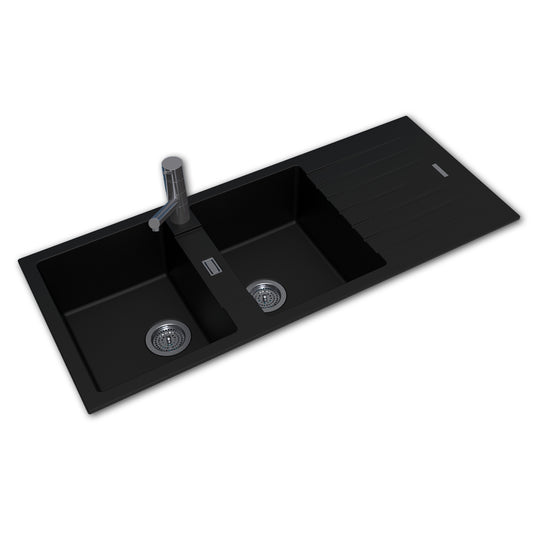
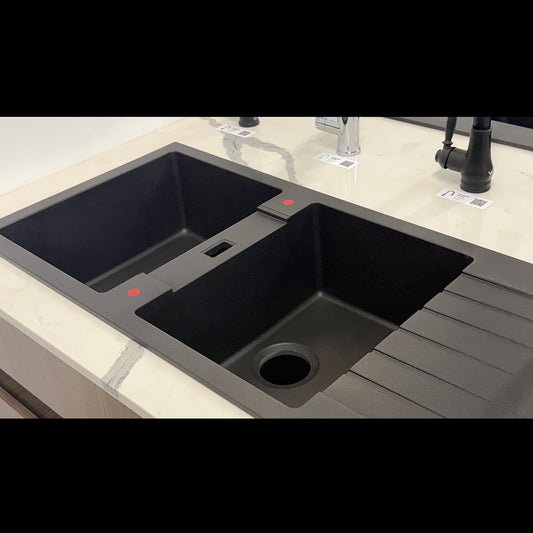
A standard mixer keeps the sink area simple, while a pull-out mixer adds flexible reach. Compare the practical differences before choosing your kitchen tap.
Choosing between a standard and a pull-out kitchen mixer is less about which one is “better” and more about what happens at your sink every day.
A standard kitchen mixer keeps things simple: the outlet stays fixed, although the spout may swivel. A pull-out or retractable kitchen mixer adds a spray head on a flexible hose, allowing you to bring the water closer to cookware, produce and the edges of the sink.

The quick answer
Choose a standard kitchen mixer if you value a straightforward design, have limited room below the sink or rarely need water beyond the normal spout reach. Choose a pull-out kitchen mixer if you regularly rinse large cookware, clean a wide or double-bowl sink, wash produce or fill containers beside the sink. Before ordering either type, check the actual height, spout reach, swivel range, sink depth, tap-hole requirements, WELS information and installation space.
What is the difference between a standard and pull-out kitchen mixer?
A standard kitchen mixer has a fixed water outlet. Many standard mixers still swivel from side to side, which can be enough for an everyday single-bowl or double-bowl sink when the spout is correctly positioned.
A pull-out kitchen mixer(also commonly described as a retractable mixer) has a spray head connected to a flexible hose. The head pulls away from the spout and returns after use. Depending on the model, it may offer one water pattern or a choice between a regular stream and a wider spray.
You may also see “pull-out” and “pull-down” used for different hose directions and spout shapes. Product naming is not always consistent, so compare the actual hose reach, mixer height, spray functions and return mechanism rather than relying only on the category name. For a broader overview, see our guide to the different types of kitchen mixers.

Standard vs pull-out kitchen mixer: quick comparison
| Question | Standard mixer | Pull-out mixer |
|---|---|---|
| How far can the water reach? | Limited to the spout reach and swivel range | Flexible hose extends the working reach |
| Is it useful for large cookware? | Can work well when height and reach suit the sink | Makes directional rinsing easier |
| Can it clean sink corners? | Depends on spout reach and bowl size | Usually easier because the head can be moved |
| Does it need clear cabinet space? | Normal plumbing access is still required | The hose and return system need an unobstructed path |
| How many moving parts? | Generally fewer | Includes the hose, moving spray head and return components |
| Which usually costs more? | Often the more economical option | Often costs more because of the additional mechanism |
| Best for | Simple routines and correctly matched compact or everyday sinks | Frequent cooking, wide sinks, double bowls and directed rinsing |
Important: these are general differences, not guarantees about every model. A tall standard gooseneck may offer excellent pot clearance, while a compact pull-out mixer may fit beneath overhead cabinetry. Always compare the individual specifications.
When is a standard kitchen mixer the better choice?
A standard mixer is not a lesser option. For many households, its simplicity is exactly the advantage.
Consider a standard kitchen mixer when:
- Your normal washing and food-preparation tasks stay within the sink.
- The sink is compact enough for the fixed spout to reach the useful washing area.
- You use the dishwasher for most large cleaning jobs.
- The cabinet below contains bins, filters or stored items that would obstruct a retractable hose.
- You prefer fewer moving components and a straightforward daily routine.
- You want to direct more of the renovation budget to the sink, benchtop or other fixtures.
Do not assume that “standard” means short or basic. Standard mixers are available in compact, square-neck and tall gooseneck profiles. Spout height, outlet position and swivel range remain more important than the label alone.
When does a pull-out kitchen mixer earn its place?
A pull-out kitchen mixer is most valuable when its extra reach solves a task you perform regularly, not simply because it has another feature.
A pull-out or retractable kitchen mixer may suit you if:
- You frequently rinse roasting trays, stock pots or oversized cookware.
- You want to direct water into the corners of a wide or deep sink.
- You regularly rinse vegetables in a colander or sink basket.
- You have two bowls and want flexible reach between them.
- You fill buckets, vases or other containers that do not sit comfortably beneath the spout.
- Different users would benefit from bringing the water closer to the task.
The trade-off is additional complexity. Check how the spray head docks, how the hose retracts, whether it offers one or more flow patterns and whether replacement parts and warranty support are available for the exact model.

How should the mixer match the kitchen sink?
Start with the sink dimensions and the way the bowls are arranged. A mixer that looks proportionate in a showroom may feel awkward when paired with a much smaller or wider bowl.
Compact or shallow sinks
A correctly sized standard mixer can keep the area uncluttered. A retractable model can also work, but avoid assuming that stronger flexibility automatically means better control: a high outlet or forceful spray directed into a shallow bowl may increase splashing. Compare outlet height, angle and flow rate.
Large single-bowl sinks
A pull-out head can make the far corners easier to rinse. A standard mixer can still work when its spout reaches comfortably towards the centre of the bowl and provides suitable clearance.
Double-bowl sinks
Either style can suit a double bowl. For a standard mixer, confirm that the swivel outlet reaches a useful position over both bowls. For a pull-out mixer, check the hose reach and how smoothly the head moves between bowls.
Farmhouse and deep sinks
Extra depth can reduce splash around the benchtop, but it also places the base of the bowl further from the outlet. A taller standard mixer may provide useful clearance, while a retractable head can make rinsing the bowl and large cookware easier.
Why does the space under the sink matter?
The retractable hose usually travels through the mixer and moves inside the cabinet. Its return weight or other retraction mechanism needs a clear path.
Before choosing a pull-out kitchen mixer, look below the sink for:
- Water pipes and isolation valves
- Waste pipes and sink traps
- Pull-out bins
- Water-filter equipment
- Cleaning products, baskets or shelves
If the hose or weight catches on these items, the spray head may not return neatly. Storage can sometimes be rearranged, but fixed plumbing, filters and bin hardware need to be considered before ordering. A licensed plumber should complete the installation and confirm compatibility with the existing connection and benchtop or sink.

What should you check before ordering a kitchen mixer?
Whether you choose a fixed-spout or retractable kitchen mixer, compare the following on the individual product page:
- ☑ Overall mixer height and clearance below shelves or windows
- ☑ Spout reach and where the water will land inside the bowl
- ☑ Swivel range and whether it suits one or two bowls
- ☑ Pull-out hose reach, spray settings and return method, where applicable
- ☑ Clear space beneath the sink for hoses and moving components
- ☑ Tap-hole size, mounting surface and included installation fittings
- ☑ Water-pressure and temperature requirements
- ☑ Current WaterMark and lead-free compliance applicable to the exact model
- ☑ WELS star rating, flow rate and registration number
- ☑ Product warranty, care instructions and availability of replacement parts
The Australian Government requires regulated tapware displayed online to show the relevant WELS information with a clear connection to the registered product. Use the exact product details rather than assuming that all mixers in one collection share the same rating.
Ezymall kitchen mixers to compare
These examples show why specifications matter more than a broad category name. Always check the current product page before ordering.
- Solid Brass Slim Standard Kitchen Mixer – Black — a fixed-spout example with 360° swivel movement; its product page currently lists 370mm height, 195mm length and a 6-Star WELS rating at 4L/min.
- Solid Brass Pull-Out Kitchen Mixer – Gunmetal Grey — a retractable example whose product page currently lists 445mm height, 260mm length and a 6-Star WELS rating at 4L/min.
- Solid Brass Pull-Down Kitchen Mixer – Light Brushed Brass — a tall gooseneck retractable option for customers comparing extra height with flexible reach.
You can also browse all Ezymall kitchen mixers and filter by the function, dimensions and finish that suit your sink.
Frequently asked questions
Is a pull-out kitchen mixer worth it?
It can be worthwhile if you regularly rinse large cookware, clean a wide sink, move between two bowls or fill containers outside the bowl. If most tasks stay directly beneath the spout, a well-matched standard mixer may meet your needs with less complexity.
Is a standard kitchen mixer more reliable?
A standard mixer generally has fewer moving components than a retractable model, but reliability depends on the quality, installation, water conditions, use and maintenance of the exact product. Do not judge durability from the category name alone; compare the cartridge, hose, warranty and replacement-part support.
What is the best kitchen mixer for a double-bowl sink?
Both can work. A standard mixer needs sufficient spout reach and swivel movement to serve both bowls comfortably. A pull-out mixer provides more directional reach, which may be useful when rinsing large items or cleaning both bowls.
Do pull-out kitchen mixers splash more?
Not automatically. Splashing is affected by sink depth, outlet height, water pressure, flow pattern and where the stream lands. A movable head gives you more control, but a strong spray held too high above a shallow bowl can still splash. Match the mixer and sink rather than considering either item alone.
Does a pull-out mixer need more room under the sink?
Yes, the hose and its return mechanism normally need a clear path inside the cabinet. Check for bins, filters, pipework, shelves and stored products that could interfere with movement.
Can a pull-out kitchen mixer replace a standard mixer?
Often, but not always as a simple like-for-like change. The installer must check the tap hole, mounting surface, connections, pressure requirements, available cabinet space and the instructions for the selected model. Use a licensed plumber for the replacement.
Should I choose the sink or mixer first?
Ideally, choose them together. If the sink is already selected, use its bowl width, depth and tap position to determine the mixer height, reach and swivel movement you need. If replacing only the mixer, measure the existing setup before ordering.
Sources and further checking
The better mixer is the one that fits your routine
A pull-out kitchen mixer offers genuinely useful reach, but extra functionality is only valuable when you will use it. A standard mixer remains a sensible choice when the spout comfortably serves the sink and you prefer a simpler setup.
Before choosing, picture the awkward tasks: the largest tray you wash, the furthest sink corner, the colander you rinse and the space below the bowl. Those details will tell you more than the product category alone.
Compare the function—not only the finish
Check the measurements and current specifications of each mixer against your sink and cabinet.
Compare standard mixers Compare retractable mixers