Learn how to care for a shower station without damaging its finish. This guide covers gentle surface cleaning, shower-head nozzles, hoses, diverters, low flow, leaks and the maintenance mistakes to avoid.
Regular, gentle cleaning is the safest starting point for maintaining a shower station. Rinse away soap residue, wipe accessible surfaces with a clean soft cloth and dry the finish after cleaning. If more than water is needed, use only the cleaning method permitted by the manufacturer for that exact model and finish.
Do not assume vinegar, bleach, abrasive cream, descaler or a bathroom spray is safe for every shower station. Chrome, matte black, gunmetal, brushed and PVD finishes can have different care requirements. A product that is suitable for tiles or shower glass may damage a plated or coated fitting.

Quick answer: how should you clean a shower station?
- Check the product care instructions and identify the finish.
- Rinse off loose soap and residue with clean water.
- Wipe gently with a clean, soft cloth.
- If permitted, use a small amount of mild detergent diluted in warm water.
- Rinse away all cleaning residue and dry with a separate soft cloth.
- Check the spray nozzles, hose, connections and brackets without dismantling plumbing components unnecessarily.
This guide covers conservative care principles for a typical twin shower or dual shower system. The instructions supplied with your product take priority because materials, coatings, removable parts and warranties vary.
What parts of a shower station need maintenance?
A shower station usually combines several components, and they do not all require the same treatment:
| Component | Routine attention | What to avoid |
|---|---|---|
| Overhead shower | Rinse the face, remove surface residue gently and check for uneven or misdirected spray | Poking nozzles with sharp objects or soaking the head without manufacturer approval |
| Handheld shower | Clean the face and handle, test spray settings and check that it sits securely in the holder | Forcing stiff selectors or using unsuitable chemicals |
| Rail and shower arm | Wipe the finish and visually check brackets and joints | Abrasive pads, harsh cleaners or using the rail as a grab rail |
| Flexible hose | Wipe clean and inspect for kinks, wear or leakage at the connections | Twisting, stretching or sharply bending the hose |
| Diverter and controls | Keep the exterior clean and check that normal operation remains smooth | Forcing controls or dismantling cartridges without the correct instructions |
| Wall connections | Look for movement, damaged seals or signs of water escaping | Ignoring a loose fitting or suspected leak behind the finished wall |
A safe routine for cleaning the shower-station finish
1. Read the care guide first
Find the instructions for the exact brand, model and finish. A finish name describes appearance; it does not tell you how the surface was produced. Two gunmetal or matte black products can use different coating systems and may not permit the same cleaners.
2. Start with the gentlest method
Use clean water and a soft cloth first. If the manufacturer's instructions allow it, add a small amount of mild liquid detergent to warm water. Apply the solution to the cloth rather than spraying cleaner directly over joints, openings or controls.
3. Use light pressure
Wipe rather than scrub. Abrasive powders, cream cleansers, scouring pads, steel wool and rough brushes can scratch or dull a surface. A cloth that has previously held grit or another cleaning product can also cause damage.
4. Rinse and dry
Remove detergent residue with clean water, then dry the fitting with a clean soft cloth. Drying helps reduce visible water spotting, particularly on reflective chrome and dark finishes.
Important: do not copy a home remedy from one brand to another. Vinegar contains acetic acid. Some manufacturers permit a particular diluted or controlled treatment for specific products, while others expressly warn against acetic acid. Follow the instructions for your own shower station.
How should you clean chrome, matte black and gunmetal?
The conservative method is similar for most decorative finishes: gentle cleaning, complete rinsing and soft-cloth drying. The marks you notice may differ, but the finish name alone is not permission to use a stronger product.
| Finish | Marks that may be noticeable | Conservative care approach |
|---|---|---|
| Chrome | Droplets, fingerprints and streaks on the reflective surface | Rinse, wipe gently and dry to reduce streaking |
| Matte black | Pale soap or mineral residue contrasting with the dark surface | Remove residue before it accumulates; avoid abrasive rubbing |
| Gunmetal | Water spots or cleaner residue depending on sheen and lighting | Use the model's approved method and dry with a clean soft cloth |
| Brushed finishes | Residue within the visible grain or brushing | If instructed by the manufacturer, wipe gently in the direction of the finish |

If you are still choosing a colour, our chrome, matte black and gunmetal shower-station guide compares visual effect, matching and cleaning visibility.
How do you clean an overhead shower head?
Start by rinsing the spray face and wiping away loose residue. If the head has flexible silicone nozzles, the manufacturer may allow them to be rubbed gently to loosen deposits. Do this only as directed; do not use pins, knives or wire because they can damage the nozzles.
If spray remains uneven, consult the model's maintenance instructions. Some shower heads have a removable face or filter screen, while others should not be dismantled by the owner. Likewise, do not immerse or fill an overhead shower with descaler unless the manufacturer specifically permits the product, concentration and contact time.
How do you clean the handheld shower and hose?
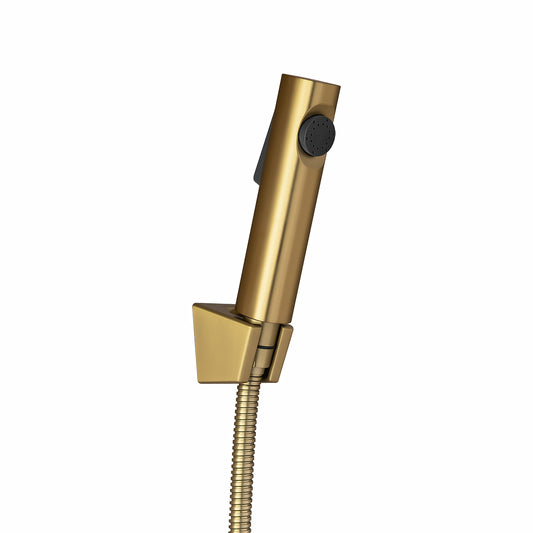
Clean the handset's exterior and spray face using the same finish-safe method. Operate any spray selector normally to check that it moves and that each setting produces an even pattern. Never force a selector that has become stiff.
Wipe the hose without twisting or stretching it. Look for kinks, worn outer material and moisture appearing at either connection while the shower is running. A leak at a threaded connection can involve a washer, seal, damaged hose or loose fitting, but the correct remedy depends on the product. Do not overtighten decorative fittings or use tools directly on a finished surface.
How do you maintain the rail, holder and diverter?
Remove soap and water residue from the rail, brackets and handset holder with a soft cloth. Move adjustable parts only through their intended range. If the handset holder slips, the rail moves at the wall or the diverter becomes difficult to operate, check the product manual or contact the supplier rather than applying excess force.
The diverter determines which outlet receives water. Its exterior can be cleaned with the rest of the fitting, but internal cartridges, seals and valves are service components. Persistent stiffness, dripping or failure to change outlets may require an approved replacement part or a licensed plumber.
What should you do if the shower loses pressure?
Reduced flow or an uneven spray pattern does not prove that the shower station is faulty. Possible causes include visible deposits at the nozzles, debris in a filter or fitting, pipes that were not flushed adequately, pressure-reducing valve settings or a mismatch between the product and the available plumbing conditions.
Begin with observations that do not alter the product:
- Check whether the change affects the overhead shower, handheld shower or both.
- Look for obvious kinks in the hose and visible residue on the spray face.
- Check whether other fixtures in the home have also changed.
- Review the manufacturer's troubleshooting instructions.
- Ask a licensed plumber to investigate persistent or sudden performance changes.
The Australian Government advises that flow controllers are selected and laboratory-tested as part of a product's design. Do not remove or modify a shower's flow controller to increase the flow. Doing so can change performance, waste water and energy, and affect the product warranty. See the official Water Rating guidance on flow controllers and low water pressure.
When does a leak need professional attention?
Stop and arrange professional advice when water appears to be escaping at the wall, a bracket or inlet is loose, the mixer or diverter continues leaking, or there are signs that moisture may be entering the wall. These are different from a few droplets draining from a shower head immediately after use.
Work involving the water supply, concealed plumbing or service components may need an appropriately licensed plumber. Do not dismantle a wall connection simply to investigate it, especially inside a waterproofed shower area.

A practical shower-station maintenance checklist
| Maintenance task | When to do it | Action |
|---|---|---|
| Remove visible soap or water residue | As it becomes noticeable | Rinse, wipe gently and dry |
| Check the spray pattern | During normal use | Look for blocked, sideways or uneven jets |
| Inspect the hose and connections | Periodically and whenever moisture appears | Look for kinks, wear and active leaks |
| Check brackets and holder | When cleaning or if movement changes | Confirm the station remains stable and the handset is held securely |
| Review service parts | If operation changes or a component is worn | Use the correct approved part and professional service where required |
There is no universal cleaning interval for every household. Water conditions, ventilation, shower frequency, finish and product design affect how quickly residue appears. Regular light care is generally safer than allowing deposits to build up and then using an aggressive cleaning method.
Frequently asked questions
Can I use vinegar to clean a shower station?
Only if the manufacturer permits it for the exact component and finish. Vinegar contains acetic acid, and some care guides specifically prohibit it. Do not apply a universal vinegar solution to chrome, matte black, gunmetal or another decorative finish without checking the product instructions.
Can I soak a rainfall shower head to remove limescale?
Do so only when the manufacturer's instructions say that the head can be removed or immersed and identify a suitable cleaning product and contact time. Some heads have removable spray faces or filters; others require a different procedure.
How often should I clean a shower station?
Clean visible water and soap residue before it becomes a heavy deposit, following the model's care guide. The necessary frequency depends on use, local water conditions, ventilation and finish, so one fixed schedule is not appropriate for every bathroom.
Why is water spraying sideways from the shower head?
An uneven spray can occur when residue affects the nozzle openings. Rinse the spray face and follow the manufacturer's nozzle-cleaning method. Do not insert sharp objects into the nozzles. If the problem remains, consult the supplier or a plumber.
Why is my handheld shower weaker than the overhead shower?
The two outlets may use different shower-head designs and registered flow rates. A kinked hose, visible nozzle deposits or debris may also affect performance. Compare the product specifications and troubleshooting guide, and arrange a plumbing assessment if the change is persistent or sudden.
Should I remove the flow restrictor to improve pressure?
No. Do not remove or alter the flow controller. It is part of the shower's designed water-efficiency performance, and changing it can affect operation, water and energy use, and warranty. Ask a licensed plumber to identify the cause of poor performance.
Can I tighten a loose shower station myself?
First identify what is moving and check the manufacturer's instructions. A loose handset holder is different from a loose wall bracket or water inlet. If the movement involves the wall connection, waterproofed surface or plumbing, use an appropriately licensed plumber.
Keep maintenance gentle and product-specific
The safest shower-station maintenance routine is simple: remove residue early, use a clean soft cloth, rinse thoroughly, dry the surface and pay attention to changes in spray, controls, hoses and connections. Stronger cleaning is not automatically better.
When limescale, low flow, a leak or a stiff diverter needs more than routine care, use the instructions and approved parts for the exact model. Avoid altering the flow controller or opening plumbing connections without the necessary knowledge and licensing.
If you are still choosing a system, compare practical configurations in our shower station vs shower rail guide, then review shower-station inlet, size and compatibility checks before ordering.