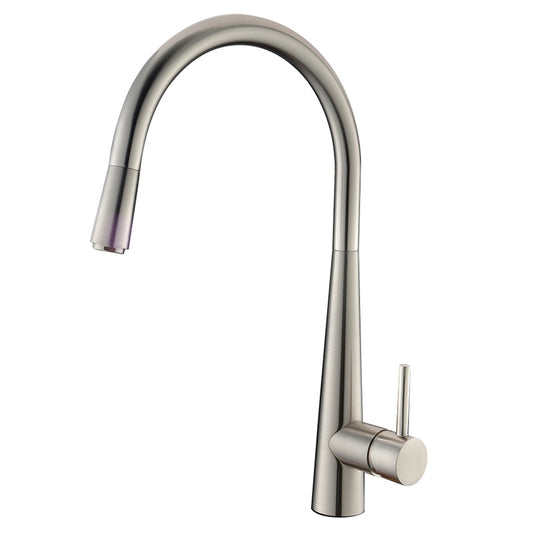
A filter-ready kitchen mixer creates a streamlined sink area while allowing you to choose a compatible under-sink filtration system for your household.
A filter-ready kitchen mixer offers a clean way to bring regular hot and cold water, and water from a compatible under-sink filter, to one attractive fixture. You can keep the benchtop uncluttered, avoid adding a small secondary filter tap and choose a mixer finish that coordinates with the rest of your kitchen.
Filter-ready mixers are designed to be paired with a separately selected filtration system. This gives you the freedom to choose the filtration technology, cartridge range and ongoing running cost that suit your household, rather than having those decisions fixed by the mixer itself.

The quick answer
A filter-ready kitchen mixer is designed to connect with a compatible under-sink filtration system. A three-way kitchen mixer usually describes one fixture that supplies hot, cold and filtered water. For Ezymall customers, the main decision is to choose the mixer you like, then pair it with a filtration system whose connections, pressure and flow requirements suit that exact model.
What does “filter-ready kitchen mixer” mean?
In practical terms, filter-ready means the mixer is designed to accept water from a compatible filtration system as well as serving its normal kitchen duties. Depending on the model, it may also combine this connection with a pull-down spray, magnetic docking or another useful everyday feature.
The appeal is straightforward:
- One coordinated fixture can serve regular and filtered-water needs
- No second filter tap needs to compete for benchtop space
- You can choose a finish and mixer shape that suit the kitchen
- You retain a broader choice of compatible filtration systems
- The filter cartridge can be selected around your water and maintenance preferences
The mixer provides the connection and control point; the compatible under-sink system performs the filtration. The product drawing explains how the exact mixer is intended to connect, allowing the plumber and filter supplier to match the two parts correctly.
Is a filter-ready mixer the same as a three-way kitchen mixer?
Not always, although the terms are often used for related products.
A three-way kitchen mixer generally means a kitchen tap that provides three water functions from one fixture:
- Regular hot water
- Regular cold water
- Filtered drinking water
A filter-ready mixer may be designed for that same three-way function even when “three-way” is not used in its product name. The useful information is found in the connection drawing: the number of inlets, the filtered-water control and the pathway through the mixer.
The safest approach is to ignore the category name for a moment and look for a diagram showing:
- Hot-water connection
- Cold-water connection
- Filtered-water connection
- How filtered water is controlled
- Whether the filtered and regular waterways remain separate
Why choose the mixer and filtration system separately?
Ezymall’s current filter-ready kitchen mixer collection gives you the mixer and its filter connection, ready to be paired with a suitable under-sink filtration system.
Choosing the two components separately can be an advantage because the mixer and filter solve different parts of the decision:
- The mixer determines the visible design, finish, height, reach and everyday sink functions.
- The filtration system determines the treatment method, cartridge type, rated flow, replacement schedule and ongoing cost.
This lets you choose a pull-down or magnetic mixer that suits your sink without being restricted to one bundled filtration system. It also allows you to compare compatible filter options around your household’s water source, available cabinet space and maintenance preferences.
The practical step is to confirm the chosen filtration system’s connection, pressure and flow requirements against the mixer before purchase. The filter supplier and licensed plumber can help with that match.
Are filtered and unfiltered water kept separate?
Some three-way mixers use a dedicated filtered-water inlet and an independent internal passage or outlet so that filtered drinking water does not travel through the regular hot-and-cold mixing chamber. This is a valuable feature, but it must be confirmed for the exact model.
Other arrangements may filter the regular cold-water supply, or use a different internal design. A filter-ready label on its own does not prove separation.
Ask the seller or supplier:
- Does the filtered water have its own inlet?
- Does it have a dedicated internal waterway?
- Does filtered water leave through a separate outlet or a shared outlet?
- Does filtered water pass through the pull-down hose or spray head?
- Which control activates filtered water?
If separate pathways matter to you, request a connection diagram or written product specification rather than relying on the terms “three-way” or “filter-ready”.
Can a filter-ready mixer connect to any under-sink water filter?
No. An under-sink filter mixer compatibility check should cover more than whether two tubes can be joined.
The mixer and filtration system need compatible:
- Inlet and outlet connection types
- Tube or hose sizes
- Working-pressure range
- Flow requirements
- Water-temperature limits
- Water source and intended filtration use
- Approved fittings and installation arrangement
- Certification and warranty conditions
Reverse-osmosis systems, chilled-water systems and ordinary carbon or sediment filters may have different tanks, pumps, tubing, flow characteristics and connection requirements. Do not assume a mixer advertised for one type will suit another.

What connections are normally involved?
A three-way arrangement commonly has regular hot and cold supplies plus a connection receiving treated water from the filter. The filtration system itself normally takes a feed from the cold-water supply and sends treated water to the mixer.
That describes the general water path, not a universal installation method. The actual hose colours, tube diameters, adaptors, valves and pressure-control requirements must come from the two product manuals. The licensed plumber should confirm that the mixer and filtration system can be connected without unapproved modifications.
How is filtered water controlled?
Depending on the product, filtered water may be operated by a second lever, a smaller separate control, a button or another mechanism. Some mixers combine filter-ready functionality with a pull-down head, but the filter function and spray function should not be assumed to operate together.
Before ordering, confirm which control provides filtered water, whether it is easy to identify, and whether its outlet and flow pattern suit filling glasses and bottles.
Does a filter tap reduce water pressure or flow?
Filtration can reduce the flow available at the filtered-water outlet because water must pass through the filter media and system components. The result depends on the incoming pressure, cartridge type, rated flow, tubing, fittings and condition of the cartridge.
A gradual drop in filtered-water flow can also be a sign that a cartridge is reaching the end of its service life or has collected more sediment than expected. Follow the filter manufacturer’s troubleshooting and replacement instructions rather than removing or bypassing components.
If the mixer has a genuinely separate filtered pathway, the regular hot-and-cold outlet may have a different flow rate from the filtered outlet. Do not assume the mixer’s advertised WELS flow rate tells you how quickly the filtration system will fill a bottle; confirm both specifications.
Similarly, a higher-flow filter is not automatically compatible with the mixer. The complete system must operate within the pressure and flow limits stated by each manufacturer.
How much space is needed beneath the sink?
Measure the cabinet as a working space, not an empty box. A filtration system needs room for the housing, hoses and fittings, plus enough access to remove the cartridge without dismantling the cabinet.
Check for:
- The sink bowl and waste pipes
- Hot and cold isolation valves
- Dishwasher connections
- Pull-out bins, drawers and shelves
- Existing water-treatment equipment
- Accessible cartridge-removal clearance
- Space to inspect connections for leaks
If you are considering a pull-down mixer with a filter connection, the retractable hose and counterweight also need an unobstructed path. They must not catch on the filter housing, tubing, bins, pipework or stored items.
Photograph the cabinet with the doors open and measure its usable width, height and depth. Give those details, along with the sink and mixer models, to the plumber before ordering.
How often does the filter cartridge need replacing?
There is no universal replacement interval. Cartridge life can be stated as a period, a treated-water capacity or whichever limit is reached first. Actual life may also vary with household use, incoming water quality and the contaminants or sediment the cartridge collects.
Use the replacement schedule for the exact filtration system. A change in taste, odour or filtered-water flow may require earlier investigation, but it should not replace the manufacturer’s service instructions.
What should you check before committing to a cartridge system?
- The exact replacement-cartridge code
- Recommended replacement interval or capacity
- Current replacement cost
- Whether cartridges are stocked in Australia
- Whether reminders or indicators are provided
- The steps and clearance needed for replacement
- Whether replacement must be completed or checked by a service provider
What if the compatible cartridge becomes unavailable?
Do not assume that a cartridge with similar dimensions or threads is a safe substitute. Filtration performance, seals, flow and system approval may depend on the specified cartridge and head.
Ask before buying whether the supplier has a current replacement range and what happens if the original cartridge is discontinued. Depending on the system, an approved replacement may be offered—or the filter head or complete filtration system may need to be changed. The mixer may still provide regular hot and cold water in some designs, but that must be confirmed from its plumbing arrangement.
Does a filter-ready kitchen mixer still need WaterMark and WELS information?
Yes. A kitchen tap does not stop being regulated tapware because it also has a filtered-water function.
Australian Government guidance says taps supplied in Australia must be WELS registered and display their water-efficiency information. Regulated plumbing products must also have valid WaterMark certification before they can be legally installed by a licensed plumber.
On the exact product page, look for:
- WaterMark trademark and licence information
- WELS registration number or registered model name
- WELS star rating
- Tested flow rate in litres per minute
The filter system and its plumbing components may have their own certification, installation and water-quality requirements. A compliant mixer does not automatically certify every filter connected to it, and a filtration claim is not the same thing as a WELS water-efficiency rating.
What should a licensed plumber confirm?
Before installation, ask the plumber to check:
- The exact mixer and filter system are compatible
- The WaterMark and WELS details apply to the supplied model
- The hot, cold and filtered-water connections match the instructions
- The property’s water pressure is within the specified ranges
- Any required pressure-control, isolation or safety components are allowed for
- The tap hole and benchtop thickness suit the mixer
- The filter, tubing and pull-down mechanism fit beneath the sink
- The cartridge can be accessed and replaced
- The completed system can be flushed, tested and checked for leaks as specified
For help with the physical fit of the mixer itself, use our guide to measuring a kitchen mixer before ordering.
Filter-ready kitchen mixer pre-purchase checklist
Complete this for the exact mixer and filtration system. If a field cannot be confirmed from the product documentation, ask the seller or installer before ordering.
| Question | Confirmed details | Checked? |
|---|---|---|
| Which filtration system will be paired with the mixer? | ________________________________ | ☐ |
| Is filtered water carried through a dedicated pathway? | ________________________________ | ☐ |
| Which filters are approved or confirmed compatible? | ________________________________ | ☐ |
| What connections and adaptors are required? | ________________________________ | ☐ |
| What are the mixer and filter pressure ranges? | ________________________________ | ☐ |
| What are the regular and filtered flow rates? | ________________________________ | ☐ |
| Is there room for housing, hoses and cartridge removal? | ________________________________ | ☐ |
| What is the replacement cartridge code and schedule? | ________________________________ | ☐ |
| Are replacements available locally and at what current cost? | ________________________________ | ☐ |
| Are WaterMark and WELS details verified for this model? | ________________________________ | ☐ |
| Has a licensed plumber reviewed the proposed system? | ________________________________ | ☐ |
Frequently asked questions
What is a filter-ready kitchen mixer?
It is a kitchen mixer designed to receive water from a compatible under-sink filtration system while continuing to provide the everyday functions expected from a kitchen mixer. Ezymall’s filter-ready mixers allow the filtration system to be selected separately.
Is a three-way kitchen mixer the same as a filter tap?
A three-way kitchen mixer normally combines hot, cold and filtered water in one fixture. A separate filter tap provides filtered water through an additional small tap. Both can work with under-sink filtration, but they have different benchtop, connection and product requirements.
Does a filter-ready mixer purify water by itself?
No. The mixer delivers water; the compatible filtration system performs the treatment. Confirm what the selected filter is tested or specified to reduce, and do not infer filtration performance from the mixer description.
Does filtered water mix with normal tap water?
Some three-way mixers use a dedicated inlet and internal pathway to keep filtered water separate, but this is model-specific. Ask for the connection and waterway diagram if separation is important.
Can I connect an existing water filter to a new three-way mixer?
Possibly, but only after checking the connection sizes, tubing, pressure, flow, filter type, approved fittings and warranty requirements for both products. Ask the filter supplier and licensed plumber to confirm compatibility.
Will a kitchen mixer with filtered water have lower pressure?
The filtered outlet can have a lower flow than the regular outlet because water passes through the filtration system. The result depends on the filter, cartridge condition, incoming pressure, tubing and mixer. A separate-waterway design may leave the regular hot-and-cold flow unaffected, but this must be checked for the exact model.
How often should an under-sink filter cartridge be changed?
Follow the exact system’s time or capacity limit. Replacement frequency can also be affected by use and incoming water quality. Do not apply another brand’s replacement schedule to your cartridge.
Can a filter-ready mixer also have a pull-down spray?
Yes, some products combine a retractable spray head with a filter connection. Confirm which outlet or mode delivers filtered water, whether the filtered pathway is separate and whether there is enough cabinet space for both the filter and retractable hose.
Do I need a licensed plumber to install a filter-ready kitchen mixer?
Yes. The mixer and filtration connections form part of the plumbing installation. A licensed plumber should confirm the products, pressure, fittings, certification, cabinet layout and manufacturer instructions before completing and testing the installation.
Australian sources and further checking
- Australian Government Water Rating: consumer protections
- Australian Government WELS product comparison and register
- WaterMark Product Database
For compatibility, cartridge life, filtration performance and installation, also use the current manuals for the exact mixer and filtration system being combined.
A streamlined mixer with the freedom to choose your filter
A filter-ready kitchen mixer offers a practical middle ground: one coordinated fixture at the sink, plus the freedom to select an under-sink filtration system around your household’s needs and budget.
Choose the mixer for the sink layout, everyday functions and finish you want. Then have the compatible filtration system matched to its connection, pressure and flow requirements. The result can be a cleaner-looking benchtop without giving up choice behind the cabinet door.
Compare the complete system—not only the mixer
Choose your preferred mixer, then pair it with a compatible under-sink filtration system.
Browse filter-ready kitchen mixers Compare all kitchen mixers