Wondering whether a handheld bidet will fit your existing toilet? Learn what to check before buying, how connectors and valves work, why licensed installation and backflow protection matter in Australia, and whether a handheld bidet is right for your bathroom.
In many Australian bathrooms, a handheld bidet spray can be added without replacing the entire toilet. However, compatibility involves more than finding a hose that appears to fit.
You need to consider the existing water connection, available space, connector size, pressure control, WaterMark certification and the backflow protection required for a compliant installation.

The quick answer
Many toilets can accommodate a handheld bidet, but not every product will suit every toilet. A licensed plumber should inspect the existing setup, confirm compatibility and complete the installation.
Important: use a licensed plumber
A plumbed-in bidet is not a DIY installation in Australia. Any handheld bidet, bidet seat or smart toilet connected to the household drinking-water supply must be installed by a licensed plumber. The plumber must confirm product suitability, applicable WaterMark requirements and the backflow protection required for the particular installation.
What is a handheld bidet spray?
A handheld bidet spray is a trigger-operated nozzle connected to a flexible hose beside the toilet. It provides a controlled stream of clean supply water for personal washing after using the toilet.
Unlike a complete smart toilet or electronic bidet seat, a basic handheld spray generally does not require replacing the toilet or connecting electrical features. However, it still connects to the household drinking-water supply and must be installed correctly.

Will a handheld bidet fit my existing toilet?
A handheld bidet can often be fitted when the toilet has an accessible water connection and enough space for the required valve, hose and holder.
Before buying, check:
- Whether the toilet isolation valve and inlet connection are accessible
- The connection sizes used by the toilet, hose and selected bidet kit
- Whether there is room for the connector without placing stress on the hose
- Where the spray holder can be positioned safely and conveniently
- Whether the product carries the required WaterMark certification
- What backflow protection the licensed plumber determines is necessary
- Whether the household water pressure suits the selected product
Do not assume that every fitting described as “universal” will suit every Australian toilet. Concealed cisterns, unusually positioned inlet valves and imported fittings may require a different solution.
A useful approach is to photograph the toilet water connection and note its dimensions before speaking with a plumber or supplier.

What is a bidet connector or diverter valve?
Most toilets have one cold-water supply serving the cistern. Adding a handheld bidet usually requires a fitting that divides or redirects that supply.
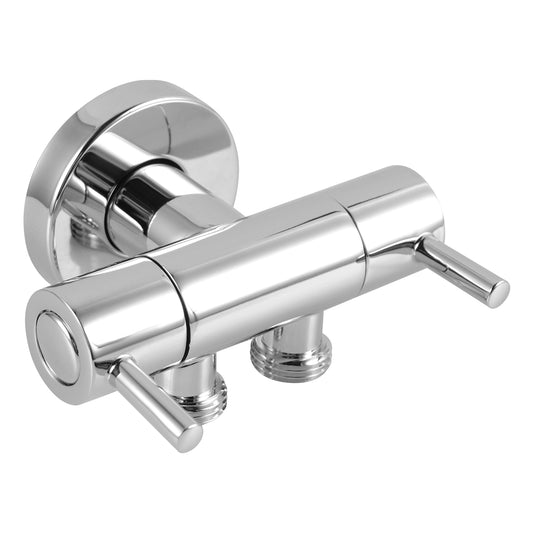
The same general component may be described online as a bidet connector, bidet diverter, bidet valve, T-valve, T-adapter, dual-outlet connector or independent dual-control valve. These terms are related, but the products do not always operate in exactly the same way.
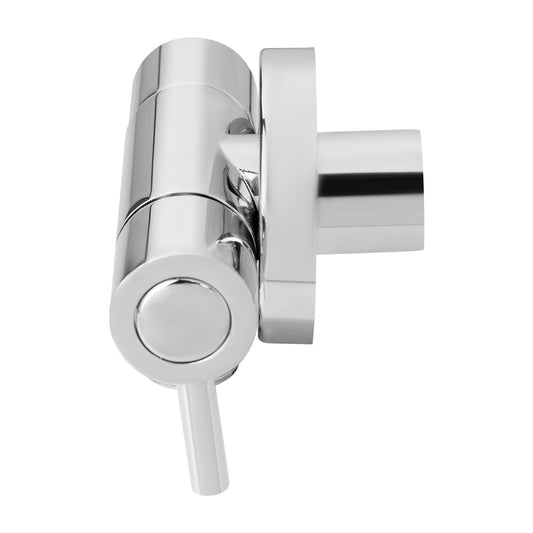
A basic T-valve divides one water inlet between the toilet cistern and bidet hose. An independent dual-control connector provides separate controls for the toilet and bidet outlets, allowing one line to be isolated without necessarily interrupting the other.
A bidet connector controls or distributes water flow. It should not automatically be treated as a substitute for the backflow protection required for the installation. Your plumber must assess these as separate requirements.
Browse Ezymall’s bidet connectors and valve options to compare the available fittings.
What does each part of a handheld bidet setup do?
The spray, connector and backflow device perform different jobs. Seeing them as separate parts makes it easier to compare a package and understand what may still be required.
| Component | What it does | What it does not automatically do |
|---|---|---|
| Handheld spray and hose | Delivers the water | Does not automatically control or isolate the supply |
| T-valve or diverter | Divides or redirects the water supply | Is not automatically an approved high-hazard backflow device |
| Dual-control valve | Allows separate outlet control | Does not prove the installation has compliant backflow protection |
| Backflow-prevention device | Protects the drinking-water supply | Does not replace the spray, hose or connector |
Can you install a handheld bidet yourself?
In Australia, any handheld bidet spray, bidet seat or attachment connected to the household drinking-water supply must be installed by a licensed plumber, even when the product appears to use a simple T-valve connection. The ACCC Product Safety guidance for connected bidet products warns that DIY installation can create cross-connection and backflow risks.
A licensed plumber will check that the product is suitable for installation, confirm applicable WaterMark certification requirements and install the correct backflow protection. This helps prevent contaminated water from entering the drinking-water supply.
Only portable, manually filled products, such as travel bidet bottles and sitz baths with no plumbing connection, can be used without plumbing installation. Electric bidet seats and smart toilets may also require a licensed electrician if a new or altered power connection is needed.
What happens during professional installation?
A licensed plumber will generally complete four stages. This overview explains the process; it is not a set of DIY plumbing instructions.
1. Assess and isolate the water supply
The plumber examines the toilet, isolation valve, inlet connection and available space, then isolates the water supply.
2. Select the connection and backflow protection
The plumber confirms connection sizes and selects a suitable T-valve, diverter or dual-control connector. They separately determine the required backflow protection.
3. Connect and position the handheld spray
The valve, hose and spray are connected, and the holder is positioned for comfortable use without unnecessary strain on the hose.
4. Test the completed system
After restoring the supply, the plumber checks for leaks, confirms correct operation and tests any required protective devices. Ask whether documentation or future testing applies in your jurisdiction.

Why is backflow protection important?
Backflow means water travelling in the wrong direction, from a fixture back into pipes carrying drinking water.
A handheld bidet nozzle can be positioned close to, or accidentally enter, the toilet bowl. If mains pressure suddenly falls and appropriate protection is absent, contaminated water could be drawn back towards the drinking-water supply.
Handheld bidet or douche trigger sprays are treated as a high-hazard cross-connection risk because the outlet may reach the toilet bowl. A licensed plumber must determine and install the approved high-hazard protection required for the complete setup. A WaterMark-certified spray does not, by itself, prove that the finished installation has the required backflow protection.
Before buying, look for the WaterMark trademark and licence information and confirm the exact model in the WaterMark Product Database. Do not rely solely on a product listing or a connector’s appearance.
What Australian requirements should I discuss with my plumber?
Licensed installation
Connecting a bidet product to the household water supply is licensed plumbing work. A licensed plumber should inspect, install and test the complete system.
WaterMark certification
Products that require WaterMark certification must be authorised for use in Australian plumbing installations. Confirm the product and its licence information before installation.
Appropriate backflow protection
A handheld trigger spray presents a high-hazard cross-connection risk. The acceptable protective device and its position depend on the complete installation and applicable local requirements. NSW readers can review the NSW Government plumbing and backflow guidance, while customers elsewhere should check their state, territory or local water authority requirements.
Testing and documentation
If a testable backflow device is required, registration, commissioning and ongoing testing may also apply. Ask the plumber what records and future servicing are required in your jurisdiction.
Is a handheld bidet worth it?
A handheld bidet may be worthwhile if you value controlled water-based cleaning, want to reduce your reliance on toilet paper or prefer a more affordable retrofit than replacing the entire toilet with a smart model.
- Water-based personal cleaning
- Less reliance on toilet paper
- Manual control over the direction and duration of the spray
- A compact design that does not require a separate bidet fixture
- The ability to retain a compatible existing toilet
- A choice of finishes to coordinate with other bathroom fittings
Practical considerations include manual operation, commonly unheated cold water, pressure control, routine inspection of the hose and connections, compliant installation costs and whether the spray is comfortable for the intended user.

Is a handheld spray the right bidet option?
A handheld spray is only one way to add water-based cleaning. Compare the practical requirements before deciding which format suits the toilet, user and budget.
| Option | Plumbing connection | Main consideration |
|---|---|---|
| Handheld bidet spray | Yes | Manual control, hose management and high-hazard backflow protection |
| Bidet seat or attachment | Usually yes | Toilet shape, mounting dimensions and the product’s certification scope |
| Electronic bidet seat | Water and power | Toilet compatibility plus compliant electrical access |
| Portable bidet bottle | No fixed plumbing | Lower capacity and manual filling |
How should a handheld bidet be used and maintained?
Follow the instructions supplied with the exact product and the operating advice given by the installer. Controls, isolation arrangements and maintenance requirements can differ between models.
- Start with controlled pressure and keep the spray directed safely into the toilet bowl.
- Use the controlling valve or isolation method specified for that product and installation.
- Do not leave the hose continuously pressurised if the manufacturer instructs you to isolate it after use.
- Periodically check the hose, washers, connections and holder for leaks, looseness or wear.
- Stop using the product and isolate it safely if you notice leaking, swelling, cracking or other damage; arrange inspection or replacement.
- Clean with a soft cloth and follow the manufacturer’s care directions. Avoid abrasive materials unless the manufacturer expressly permits them.
Aquaperla’s published warranty booklet groups bidets under a residential warranty category and separately lists showers, rails, hoses and handheld products, but it does not identify the coverage period for every component in a handheld bidet kit. Confirm the spray, hose, holder, valve and any other supplied parts against the exact product warranty before relying on a particular period.
How much does handheld bidet installation cost?
There is no reliable single installation price. Cost depends on access to the existing connection, the fittings required, backflow protection, pressure management, local labour rates, certification or testing requirements and whether existing plumbing must be altered.
Before purchasing, send the plumber photographs of the toilet connection and details of the intended product. Ask for a quote that separates the bidet kit, connector, backflow device, labour and any ongoing testing requirements.
Can a renter install a handheld bidet?
Renters should obtain written permission from the property owner or manager before arranging plumbing work. A removable handheld spray may involve less alteration than replacing the toilet, but it must still be installed by a licensed plumber and satisfy the same plumbing and backflow requirements.
What should I check before buying?
- ☑ My existing toilet water connection is accessible.
- ☑ I have checked the relevant connector sizes.
- ☑ There is enough space for the valve, hose and spray holder.
- ☑ The bidet product has appropriate WaterMark information.
- ☑ A licensed plumber has confirmed the installation requirements.
- ☑ I understand that a diverter valve and backflow device may serve different purposes.
- ☑ I have checked what is included in the package.
- ☑ I know whether a connector, hose, holder or isolation valve must be purchased separately.
- ☑ The selected finish coordinates with the bathroom.
- ☑ I understand the recommended shut-off and maintenance procedure.
Which handheld bidet products and fittings can I compare?
Compare the spray material, finish, connection requirements and package inclusions before ordering. The connector and any required backflow protection may be separate from the handheld spray.
- Chrome handheld toilet bidet spray — a brass spray option in a chrome finish.
- Independent dual-control bidet valve — separate controls for the toilet and bidet outlets.
- Handheld toilet bidets and accessories — compare available sprays, finishes and related fittings.
Before ordering: check each product’s inclusions and specifications, then have a licensed plumber confirm suitability for your toilet and installation.
Frequently asked questions
Can a handheld bidet fit any toilet?
Not every handheld bidet will fit every toilet. Many standard toilets can accommodate one, but compatibility depends on the existing water connection, available space, connection sizes and compliant plumbing requirements. Ask a licensed plumber to assess the setup before purchasing.
Can I install a handheld bidet myself in Australia?
No. A bidet connected to the household drinking-water supply must be installed by a licensed plumber. The installation must address product suitability, WaterMark requirements, cross-connection risk and appropriate backflow protection.
What connector do I need for a handheld bidet?
The required fitting depends on the toilet inlet, bidet hose and desired level of water control. Common options include T-valves, diverter valves and independent dual-control connectors. Confirm all connection sizes and installation requirements with your plumber.
Is a bidet diverter the same as a backflow-prevention device?
Not necessarily. A diverter distributes or controls water between outlets. Backflow protection prevents contaminated water from entering the drinking-water supply. A plumber must determine the specific protective device required for the installation.
Is a handheld bidet worth buying?
It can be a convenient and compact way to add water-based personal cleaning while retaining a compatible toilet. Its value depends on your preferences, installation costs, bathroom layout and willingness to operate and maintain a handheld spray.
Are handheld bidet sprays legal in Australia?
Yes, a suitable handheld bidet spray can be legally installed when the product and complete installation meet the applicable requirements. Connected bidet products must be installed by a licensed plumber, carry required WaterMark certification and have the approved backflow protection for the installation.
Does a WaterMark-certified spray still need separate backflow protection?
WaterMark certification confirms the product is authorised for its certified plumbing use; it does not automatically prove that the complete installation has high-hazard backflow protection. The plumber must check the exact certification scope and determine what protective device and installation method are required.
Can a handheld bidet be installed with a concealed cistern?
Sometimes, but it depends on whether there is an accessible and suitable water connection, enough room for the required fittings and a compliant way to install the backflow protection. Do not assume a standard T-valve will fit. Ask a licensed plumber to inspect the setup before buying.
Should the bidet water supply be turned off after every use?
Follow the operating instructions for the exact product and the isolation method specified by the installer. If the manufacturer requires the hose to be depressurised or the controlling valve to be closed after use, follow that direction each time. Do not apply generic shut-off advice to a model whose instructions have not been checked.
What parts are normally included with a handheld bidet spray?
Package contents vary. A kit may include a hand spray, flexible hose and wall holder, while the connector, isolation control and backflow device may be separate. Check the individual product page and packaging. For example, Ezymall’s chrome ABS handheld spray currently lists one hand sprayer, one holder and one 1.2-metre stainless-steel hose.
Does a backflow device require registration or annual testing?
It depends on the device and local authority requirements. Testable backflow devices may require commissioning, registration and periodic—often annual—testing by an appropriately licensed person. Ask the installer what documentation and future testing apply at your property.
Sources and further checking
Requirements can vary with the product, plumbing configuration and jurisdiction. These official resources are useful starting points:
Choose the right bidet setup for your bathroom
Adding a handheld bidet to an existing toilet can be a practical bathroom upgrade, but the product and plumbing must be treated as one complete system. Before ordering, confirm the connection sizes, available space, included components, WaterMark information and backflow requirements.
Most importantly, have a licensed plumber assess and complete the installation. Once the right product and fittings are installed correctly, a handheld bidet can provide a convenient water-based cleaning option without requiring a complete toilet replacement.